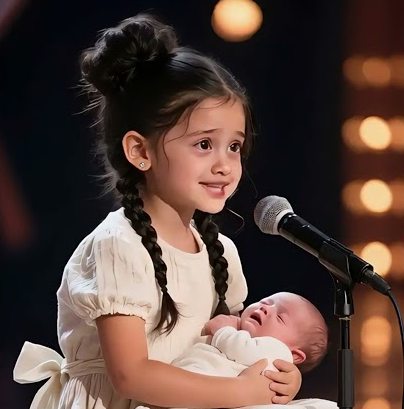
In a world that is constantly shifting with new trends, viral moments, and fleeting fads, there are still those rare instances that capture something truly universal. When a young child took the stage for a performance dedicated to his mother, it quickly became clear that this would be one of those unforgettable moments. His heartfelt rendition of a song about missing his mom resonated deeply with people around the world, captivating the internet and leaving a lasting impression on everyone who saw it. The stage was set, and as the child, no older than six or seven, stepped up to the microphone, there was an immediate sense of anticipation in the room. His small hands held the mic tightly, and his nervous but determined gaze fixed forward, as if preparing to share something deeply personal. The audience fell silent, unsure of what to expect from such a young performer, but what happened next would far exceed their expectations.
As the music began to play, the little boy’s voice broke through the quiet, shaky at first but growing steadier with each note. His song, though simple in melody, was raw in emotion. The lyrics were clear—he was singing about the pain of missing his mother, and as his small voice echoed through the speakers, it was impossible not to feel the weight of his words. He sang about longing, waiting for her to come back, and the emptiness that filled his heart when she wasn’t around. The child’s vulnerability was striking. His voice, though still developing, carried an emotional weight that belied his years. It wasn’t the perfect performance—it didn’t need to be. It was real. Every note seemed to come from a place of deep feeling, and it was clear that he wasn’t just singing a song—he was expressing his deepest emotions.
The audience, moved by the sincerity in his voice, could feel the depth of his connection to the song.As the song continued, the boy’s performance grew even more powerful. His small body swayed to the music, and his expression transformed from one of nervousness to one of quiet confidence. The emotional weight of his song seemed to lift him, as though he was no longer just a child on a stage, but a messenger of love and longing. He wasn’t just singing about missing his mom; he was telling the world about the depth of his bond with her.By the time the song reached its conclusion, there wasn’t a dry eye in the audience. The child’s voice, now stronger and more assured, brought the song to an emotional climax. His final note, though not perfect in a technical sense, was filled with such heart that it left an indelible mark on everyone present.
The room was filled with silence for a brief moment, as the weight of his performance settled over the audience. Then, slowly, the applause began. It started as a hesitant clapping, unsure of whether it was appropriate to respond to such raw emotion with applause, but it quickly grew into a standing ovation.The performance didn’t just leave the room moved—it took the internet by storm. Video clips of the child’s performance spread rapidly across social media platforms. People from all walks of life shared the video, tagging friends, and commenting about the overwhelming emotions it stirred. His song about missing his mom transcended language, culture, and age, touching hearts everywhere.Viewers expressed how they had never been moved by something so simple, yet so profound. Comments flooded in from parents, grandparents, and others who could relate to the universal experience of love, loss, and longing.
The child had unknowingly spoken to the hearts of millions.What made the performance even more remarkable was the sheer authenticity of it. In an age where social media often focuses on perfection, this young child’s song was a reminder that it’s the raw, unfiltered moments that touch people the most. His performance wasn’t about hitting the perfect notes or delivering the most polished rendition; it was about conveying the rawest of human emotions. His voice, trembling with the weight of his words, was filled with more authenticity than the most expertly trained voice could ever deliver.